Weekend plans meet a stained driveway—oil near the garage, algae by the lawn, and dusty tire marks from a busy week. Here’s the short answer: a driveway washing prep checklist is a step-by-step plan to inspect for safety, clear and protect the area, pre-treat stubborn stains, and control runoff so you clean efficiently without damaging concrete or violating local rules. If you’re in Cape Coral, Cape Coral Power Washing follows these steps daily and can jump in when you want pro support.
Key Takeaways (Quick Start)
- Inspect surface type, current condition, and drainage before you wash.
- Confirm a dry weather window and check Cape Coral guidance on storm-drain discharge.
- Clear cars and clutter; protect doors, outlets, and garage seals.
- Pre-treat oil, rust, algae, and paint with the right cleaners and dwell times.
- Manage runoff with berms or mats, and test pressure/nozzle distance on a small patch.
Start Smart: Inspect the Driveway and Plan for Safety
Check surface type, condition, and drainage. Identify whether your driveway is broom-finished, stamped, pavers, or sealed concrete, and note cracks, spalling (flaking), and any prior coatings. Observe where water naturally flows so you can steer it away from storm drains and toward allowed landscapes. Give the surface a quick sweep to remove grit that could scratch during cleaning or interfere with a surface cleaner.
Confirm weather window and local water rules. Choose a dry, mild day so detergents work properly and the slab can dry evenly. Many cities restrict discharges into storm drains; review guidance specific to Cape Coral, Florida, before you start and postpone if winds could carry overspray to doors, vehicles, or garden beds. Planning this window helps reduce rework and can help keep overall pressure washing costs in check.
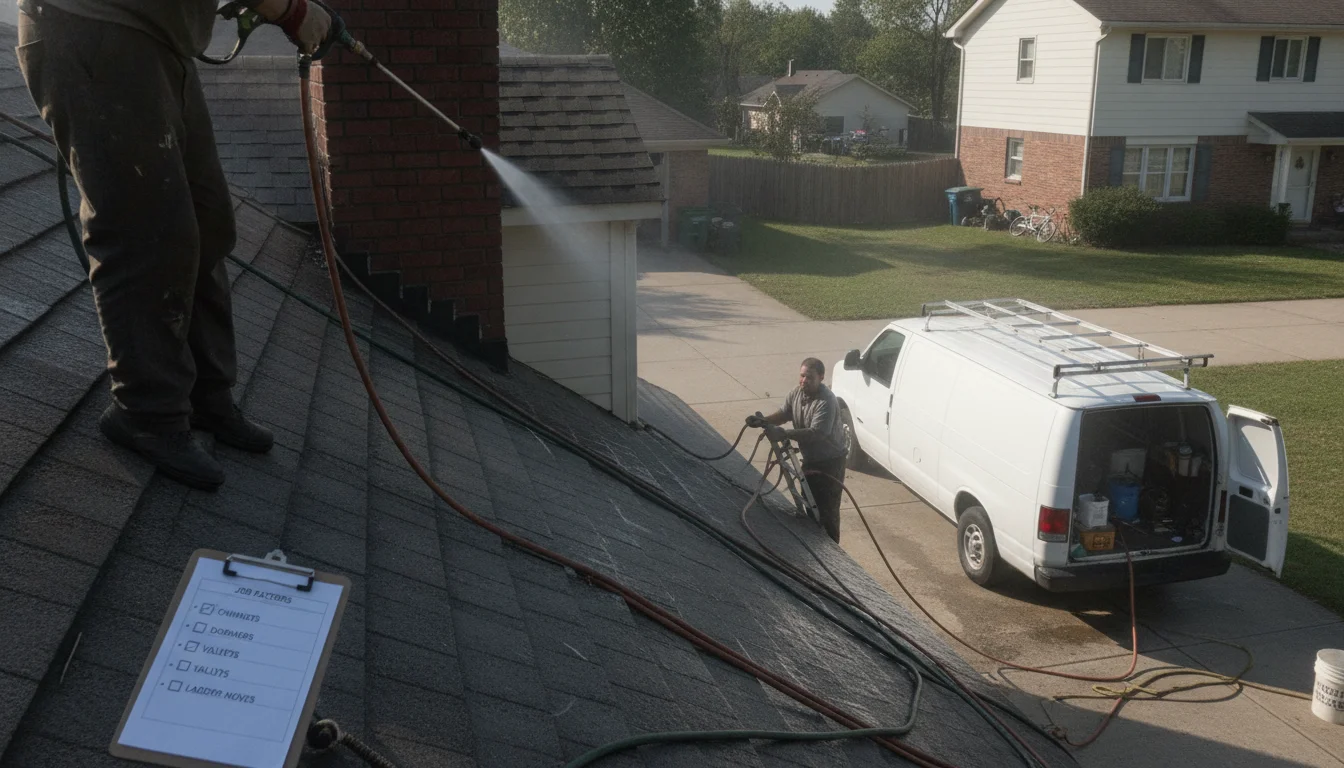
Gather tools, detergents, and PPE. Wear PPE (personal protective equipment): eye protection, gloves, boots, and hearing protection. Stock a concrete-safe detergent plus stain-specific products. Set your pressure washer conservatively at first—use a 25–40° tip and maintain a steady distance to avoid etching while you test your technique.
Clear the Area: What to Move, Cover, and Secure
Remove vehicles, bins, furniture, and trip hazards. Park cars on the street, relocate planters, toys, and grills, and coil hoses and cords. A clear work zone gives you consistent access for a surface cleaner and keeps grime from being tracked back onto freshly cleaned concrete.
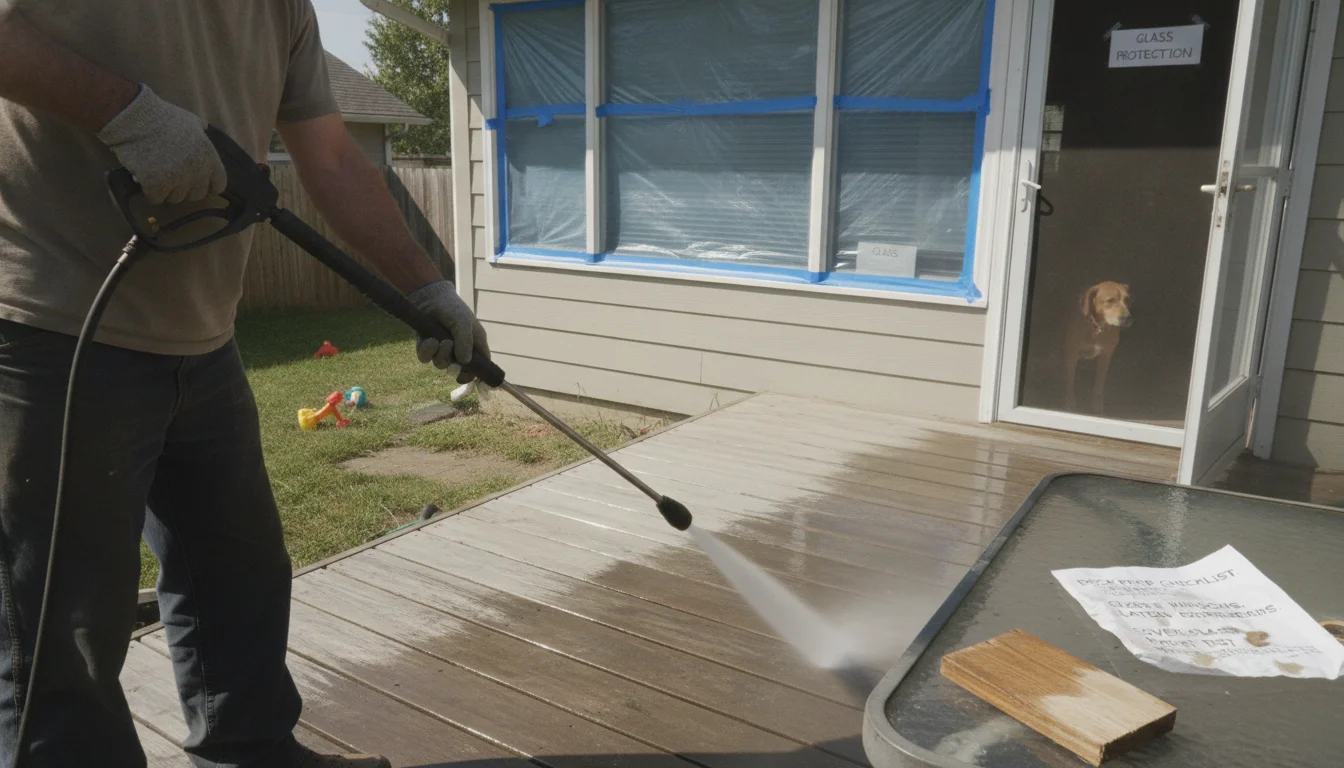
Protect doors, walls, outlets, and garage seals. Tape plastic over the lower edges of doors and siding, and cover electrical outlets (ideally GFCI). Seal garage thresholds and nearby joints with foam backer or tape so dirty water stays out of the garage. Keep the wand angled away from weatherstripping to prevent damage.
Post signs and set boundaries for people and pets. A simple “Wet Surface—Keep Off” sign works well. Keep kids and pets inside or in the backyard until the surface is dry; slippery detergents and hoses can be trip hazards during driveway cleaning.
Pre-Treat Trouble Spots: Oil, Rust, Algae, and Paint
Choose the right cleaner and dwell times for each stain. Dwell time is the period a cleaner sits on a stain to do the work. Use a degreaser for oil and tire marks, an oxalic-based rust remover for orange spots, and a light sodium hypochlorite house-wash mix for algae or mildew; for paint, choose a concrete-safe stripper and follow the label.
Agitate safely and blot up residues before rinsing. Work products in with a nylon or soft-bristle brush—avoid aggressive wire on sealed or decorative finishes. For oil, press in an absorbent (kitty litter or oil dry), allow it to pull up residue, and sweep before rinsing so it doesn’t smear.
Eco-friendlier options and when to call a pro. Enzyme and citrus degreasers can reduce chemical impact. Severe rust, large paint spills, or hot-tire transfer may call for heated water, specialty detergents, or a professional surface cleaner. If stains won’t budge or your concrete is delicate, Cape Coral Power Washing can provide a professional driveway cleaning service in Cape Coral and surrounding neighborhoods; you can also explore /driveway-cleaning and /professional-pressure-washing-services for more on our approach.
Protect Surroundings and Manage Runoff
Shield plants and lawns; pre-wet and rinse after. Plants absorb fewer detergents when leaves and soil are pre-wet. Use breathable covers on sensitive shrubs, then rinse foliage and soil again after cleaning, taking care to avoid pooling that concentrates residues.
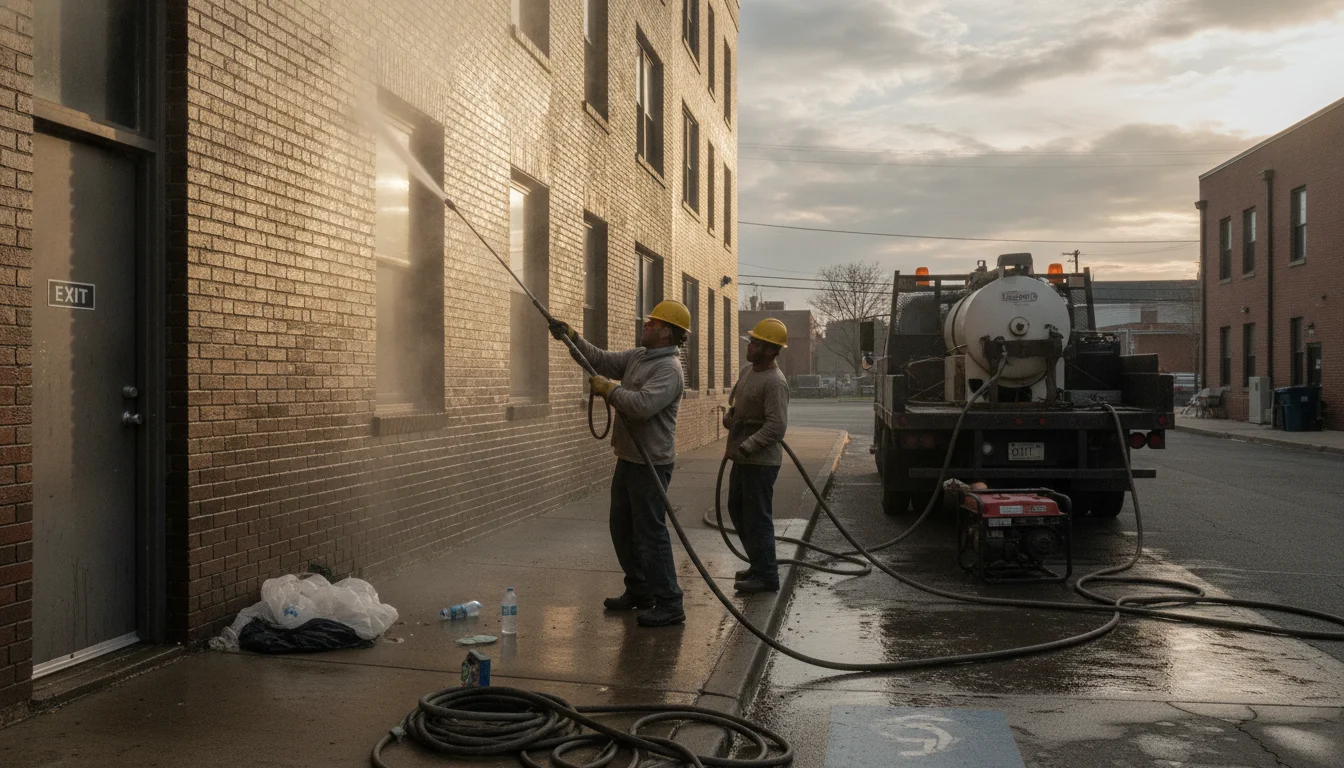
Divert water, contain chemicals, and use mats where needed. Create temporary berms with sand snakes or water-filled mats to steer wash water toward landscaping where permitted, rather than into public drains. Sweep up solids—mud, sand, and grit—before final rinses to minimize what goes down the line.
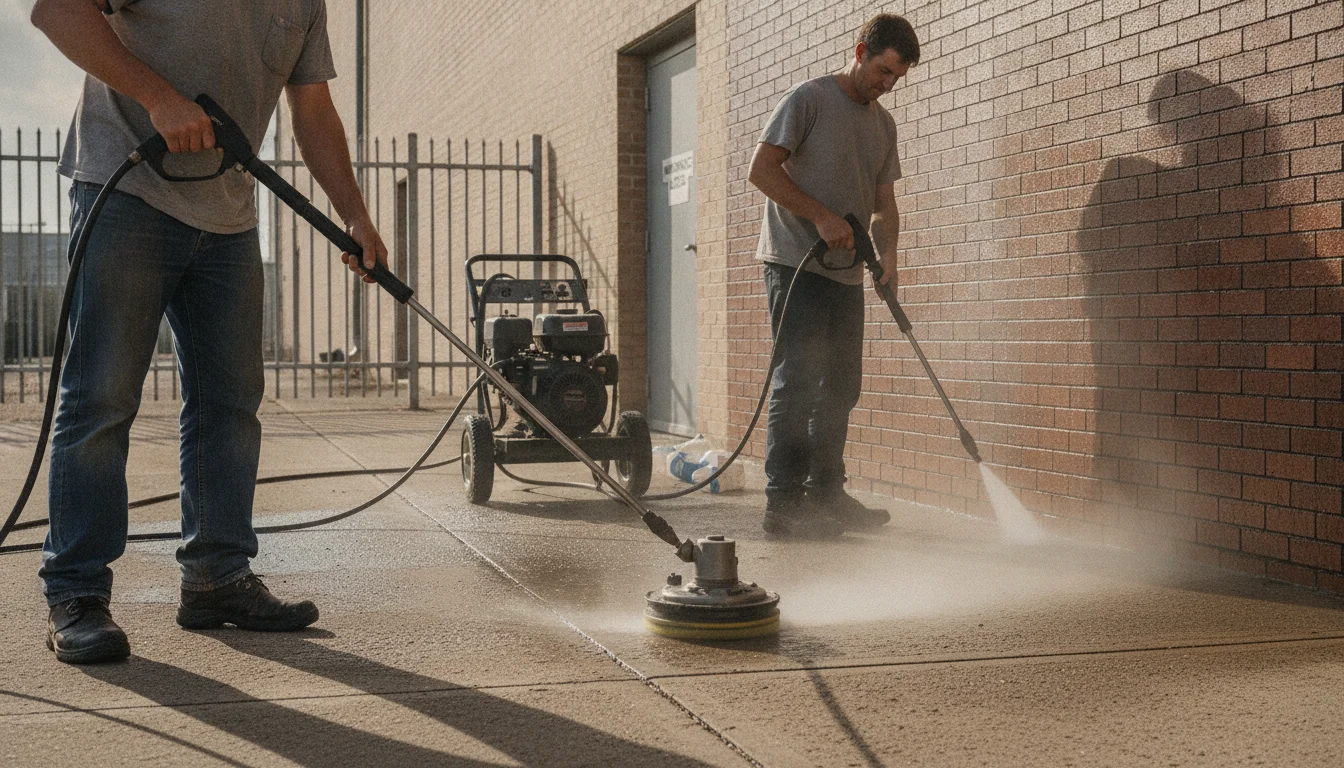
Do a small test patch and set pressure/nozzle distance. Test in an inconspicuous corner to confirm your detergent choice and technique. Increase pressure gradually, keep the nozzle 8–12 inches from the surface, and move steadily; a surface cleaner provides even results and reduces the risk of pressure washing damage to a concrete driveway.
Frequently Asked Questions
What cleaner should I use before pressure washing concrete? For general grime, use a concrete-safe detergent. Degreasers target oil and tire marks, rust removers handle orange staining, and a light sodium hypochlorite mix treats algae or mildew—always test a small spot first and follow label dwell times from your driveway washing prep checklist.
Can high pressure damage a driveway? Yes. Excessive PSI or a narrow nozzle can etch lines, pop aggregate, or force water under joints. Start low, use a 25–40° tip, and keep the wand moving at a consistent distance; a surface cleaner helps deliver even cleaning with less risk to residential concrete.
How do I keep runoff out of storm drains? Pre-sweep solids, use temporary berms or water-filled mats to redirect flow, and keep detergent use minimal. Rinse toward landscaping where allowed, not into streets, and confirm Cape Coral rules before you begin so you can contain residues and finish with a compliant rinse and dry.
Key Takeaways
- Plan first: Inspect the surface, confirm weather, and check local water rules.
- Clear and protect: Move cars and clutter; cover doors, outlets, and garage seals.
- Pre-treat smart: Match cleaners to oil, rust, algae, and paint with correct dwell times.
- Control runoff: Shield plants, divert water, and capture solids before rinsing.
- Test and adjust: Start with lower PSI and a wider tip; use a surface cleaner for even results.
Conclusion
A careful plan delivers cleaner concrete with fewer surprises. Follow this checklist to inspect, clear, pre-treat, and manage runoff, and you’ll be ready for a faster, safer wash—whether it’s a quick DIY project or prep before house washing or soft washing around the property. If you’re in Cape Coral, Cape Coral Power Washing is ready to help with concrete pressure washing and sidewalk cleaning across Cape Coral. Contact us at +1 239 977 2848 or [email protected], or reach out through /contact-us to schedule or ask a question today. For related services, see /house-washing and /soft-washing to keep siding and other exterior surfaces looking their best.