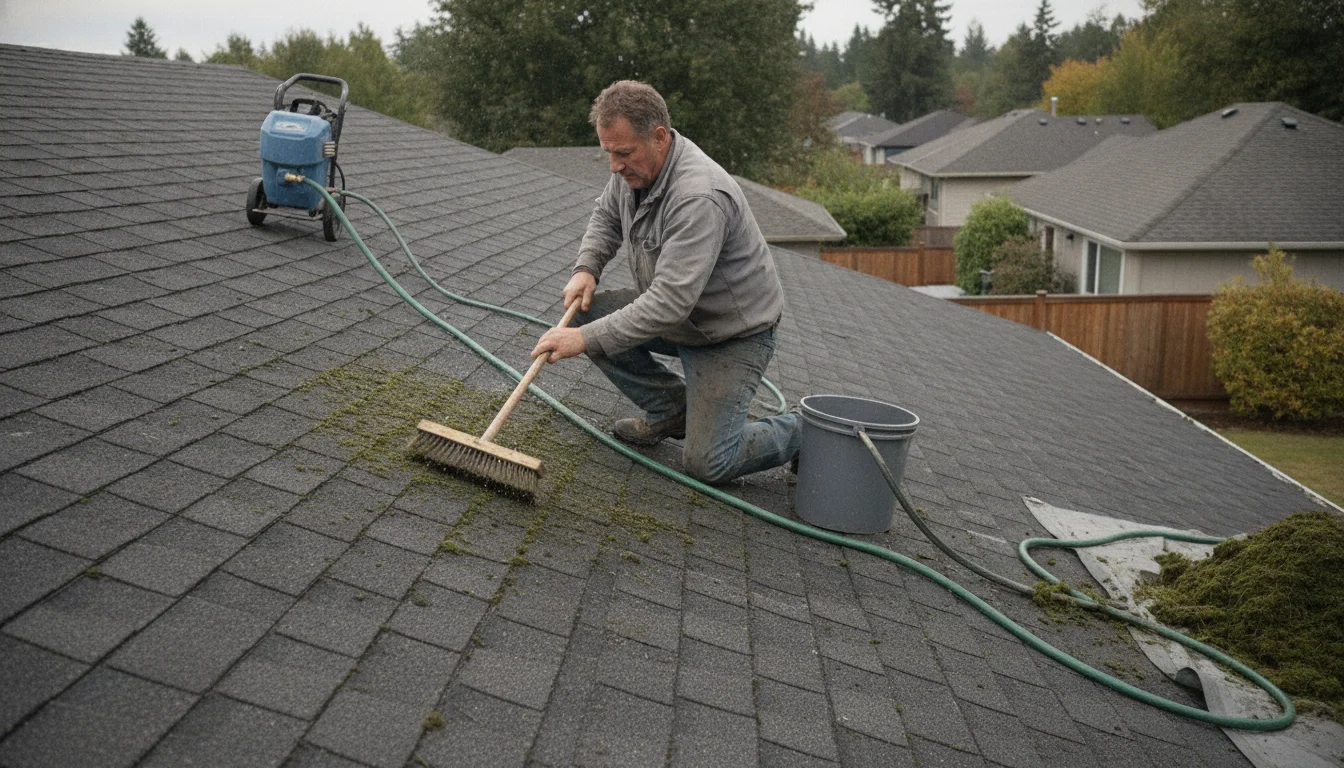
A rainy week in Cape Coral can leave a small green patch on your shingles that grows fast if ignored. Roof moss removal is the process of killing and lifting moss with a low-pressure soft wash so shingles, tiles, and flashing aren’t damaged. Soft washing means applying approved cleaners at low pressure, allowing dwell time, and then rinsing gently or letting weather release the dead growth.
Key Takeaways
- Use a soft wash, not high pressure, to protect shingles and warranties
- Pre-wet and rinse landscaping and follow cleaner labels exactly
- Let time and rain release dead moss; avoid scraping and blasting
- Prevent regrowth with zinc or copper strips and routine gutter cleaning
Why Moss Grows on Roofs and Why It Matters
Moss spreads by tiny spores that love shade, moisture, and cooler air. North-facing slopes and roofs under trees in Cape Coral stay damp longer, especially during spring and fall, so moss can advance quickly. On asphalt shingles, moss holds water and loosens protective granules, shortening roof life. On tile and wood, root-like structures can work into gaps. On metal, moss traps debris and can stain the finish. High pressure can strip shingle granules and void warranties, so stick with soft washing rather than hard blasting.
Roof moss removal uses cleaners to kill growth at the root, then a gentle rinse or natural weathering to shed it. Traditional pressure washing can drive water under shingles and cause leaks. Signs it’s time to act include fuzzy patches, lifted edges, dark mats that stay wet, and clogged gutters from shed material. In Cape Coral, these signs often appear after stormy stretches when roofs dry slowly.
Prep and Safety for DIY Roof Moss Removal
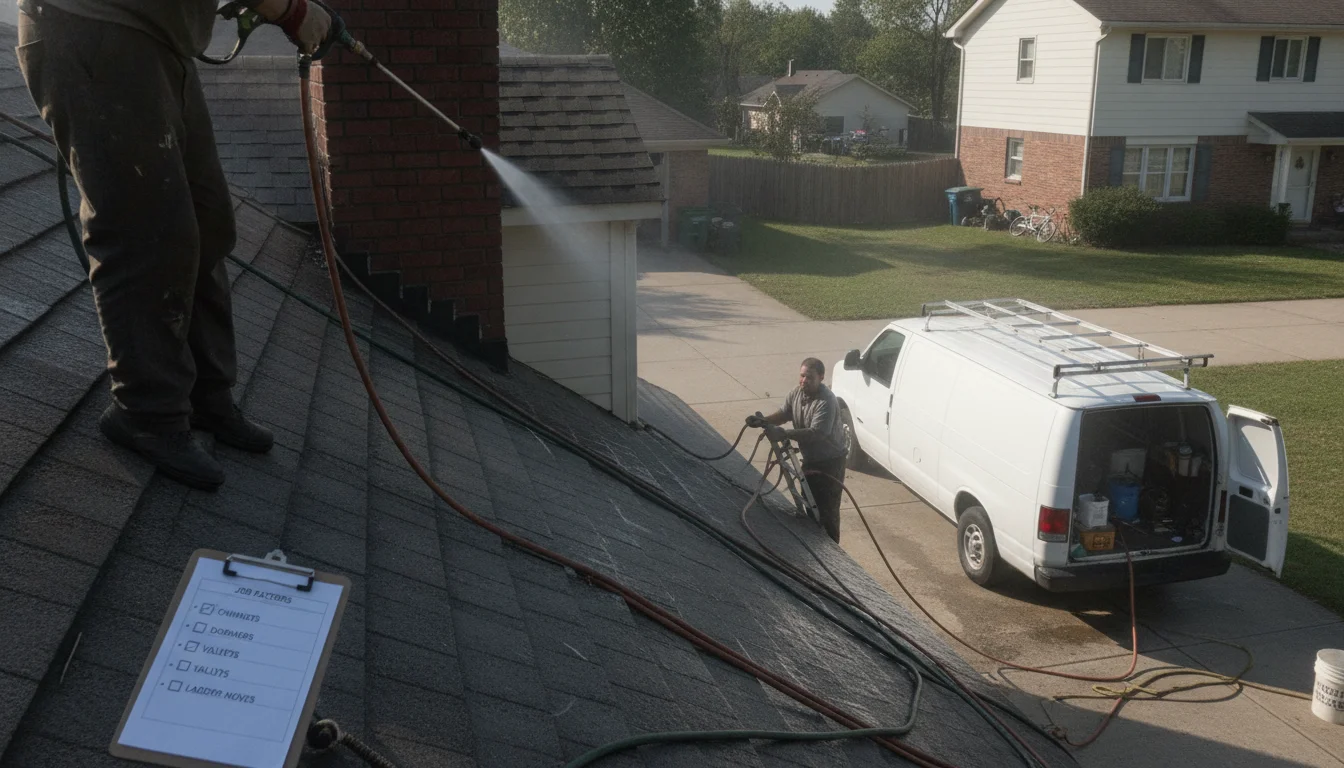
Choose a dry, mild day with no wind and work with a helper. Use a sturdy ladder with a stabilizer, wear non-slip shoes, gloves, and eye protection, and consider a roof harness on steep pitches. Protect plants by soaking them first, covering shrubs with breathable tarps, and rinsing again after application. Divert runoff from ponds and flush gutters and downspouts so cleaner doesn’t pool.
Pick a roof-safe cleaner. Sodium percarbonate (oxygen bleach) is a granular product that activates in water and is gentle on most surfaces and plants. Sodium hypochlorite (household bleach) is stronger and works quickly on heavy growth when mixed correctly. Follow the label, never mix cleaners with acids or ammonia, and test a small area first.
Tools and supplies checklist:
- Pump sprayer or soft-wash applicator
- Garden hose with a gentle rinse nozzle
- Ladder with stabilizer and a helper
- PPE: gloves, eye protection, non-slip shoes
- Tarps, hose shutoff, and a soft brush for gutters (not for scrubbing shingles)
If climbing is risky or the pitch is steep, Cape Coral Power Washing can help with soft-wash roof cleaning that protects materials and landscaping. You can also explore Roof Cleaning Services for professional options and House Washing Services for siding care.
Step-by-Step: Soft Washing to Remove Moss Without Damage
- Mix your solution. For sodium percarbonate, follow the package rate in warm water. For sodium hypochlorite blends, many roofs respond to a low-strength mix applied with a soft-wash sprayer. Always stay within maker directions and test an inconspicuous area first.
- Pre-wet nearby plants and siding. If the roof is very dry, lightly wet the surface.
- Apply from the ground with an extension wand when possible, or from a ladder. Work from the bottom edge upward so runoff doesn’t streak untreated areas. Minimize foot traffic on fragile shingles.
- Allow 10–20 minutes of dwell time. Keep the surface damp with more solution as needed. Do not let cleaner dry in the sun.
- Check the moss. It should discolor and soften. For light growth, let the rain release dead moss over the next few weeks.
- If you choose to rinse, use only a gentle hose rinse. Aim downward—never up under shingles. Do not scrape; scraping can tear shingles and spread spores.
- Retreat heavy spots as needed. Thick mats may benefit from a second light application after a week.
- Clean up. Rinse plants, flush gutters, and bag loose debris at downspout screens.
If you notice lifted shingles, leaks, or soft spots, stop and call a pro. Cape Coral Power Washing works across Cape Coral every week with dedicated soft-wash systems made for roofs and experienced technicians who follow manufacturer guidance.
Keep Moss From Returning: Maintenance and Prevention
Metal strips can help. Zinc or copper strips installed near the ridge release ions in rain that slow new growth downslope. They work best on smooth roof profiles and regular rainfall, and may stain some surfaces below, so plan placement carefully.
Improve drying by trimming branches to increase sun and airflow. Keep limbs 5–10 feet back where practical. Clear leaves each season so water drains quickly, and ensure attic ventilation helps the roof dry after storms. Routine Roof Cleaning Services and seasonal House Washing Services also support overall exterior health.
Safe seasonal roof care checklist:
- Spring: clear debris, check gutters and downspouts
- Summer: inspect for new patches and treat early
- Fall: remove leaves before winter moisture sets in
- Winter: stay off icy roofs; spot-treat from the ladder only
Call a professional for steep roofs, multi-story homes, fragile tile, or warranty concerns. Many people search roof cleaning near me and then choose a local soft-wash team. For broader exterior needs, Building Washing Services can freshen large facades, while Concrete Cleaning Services handles hard surfaces around walkways and driveways, including stain removal such as oil stain removal.
Frequently Asked Questions
What is the safest way to remove moss from shingles?
The safest approach is soft washing: apply an approved roof cleaner, allow proper dwell time, and rinse gently or let weather release dead growth. Avoid scraping and high pressure, protect plants, and work with a helper for ladder safety.
How long until the moss is gone after treatment?
Color change is often immediate, but full release typically takes 2–8 weeks. Thick mats may need a second light treatment. Keep gutters clear so dead material can wash away without clogging downspouts.
Will roof cleaning void my warranty?
High pressure can void some warranties. Soft washing with approved cleaners at low pressure is often acceptable, but always check your shingle documentation. If in doubt, hire a qualified roof cleaning service that follows manufacturer rules and provides a written process.
Key Takeaways
- Use soft washing, not high pressure, for roof moss removal
- Protect plants and follow cleaner labels for safe dwell times
- Do not scrape; let rain or a gentle rinse release dead moss
- Prevent return with zinc or copper strips, sunlight, and clean gutters
Conclusion
A careful soft wash clears moss and helps protect your shingles in Cape Coral’s humid climate. With smart prep, gentle application, and routine upkeep, your roof can stay cleaner for longer. When the work is high or complex, Cape Coral Power Washing is ready with safe methods and pro-grade tools. Contact us.