Dark streaks on stucco can appear quickly in Florida’s heat and humidity. Soft washing stucco means cleaning with very low pressure (often 100–300 PSI) and a mild cleaning mix (commonly 1%–2% sodium hypochlorite with a surfactant) to remove algae and stains without scarring the finish or driving water inside. In Cape Coral, this gentle approach keeps surfaces looking clean longer and helps avoid costly wall repairs.
Cape Coral Power Washing trains technicians to clean stucco the right way. The team understands how water forced into hairline cracks can lead to hidden damage. This guide explains how to clean stucco, EIFS (Exterior Insulation and Finish System), brick, and painted masonry safely, step by step, and why soft wash vs high pressure matters for delicate exteriors.
Soft Washing 101: What It Is and How It Protects Stucco
Soft washing uses low pressure and a targeted cleaning solution to lift stains and kill organic growth. Traditional pressure washing relies on high PSI to blast debris off the surface. On porous finishes like stucco and EIFS, chemistry and controlled flow—not force—are the right tools for the job.
Stucco and EIFS are thin, porous systems that can absorb water. Older paint films on masonry can also be fragile or chalky. High force can etch the face coat, drive moisture behind the finish, or strip weak paint.
For gentle cleaning, keep rinse pressure low—often 100–300 PSI at the wall and typically under 500 PSI. Use a wide fan tip (40°–60°) and maintain distance so the stream feels like a firm garden hose, not a cutting jet. Always test a small, inconspicuous area first. For whole-home help, consider Soft Washing Services or House Washing Services from a local team that understands Cape Coral’s climate.
Risks of High Pressure: Cracks, Water Intrusion, and Stains
High PSI can force water behind stucco or EIFS, where trapped moisture may swell, crack, or blister the finish and feed mold. It can also scar the face coat. On painted masonry, aggressive washing can cause peeling, leaving blotchy patches.
Another concern is oxidation smearing. On aging paint, blasting can drag oxidized pigment into gray or black streaks. And when you blast rather than treat, you leave root spores behind—so growth returns faster. Soft washing removes contamination and sanitizes in one process, helping the surface stay clean longer.
The Safe Stucco Cleaning Process Step-by-Step
Work methodically, protect the wall system, and let the solution do the heavy lifting.
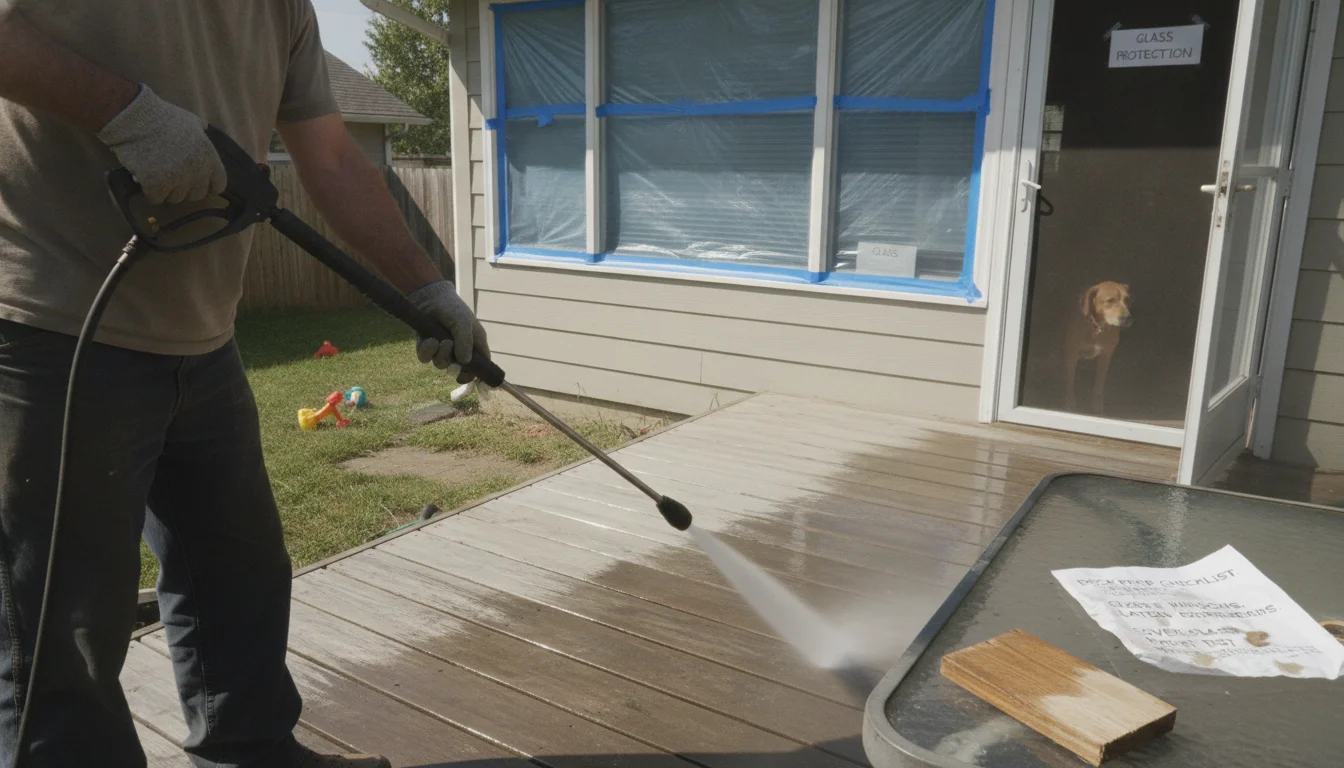
- Inspect first. Mark cracks, soft spots, rust, and peeling paint. Test a small patch in a low-visibility area. Pre-rinse or cover plants and metals.
- Select the right cleaner. A mild sodium hypochlorite mix (about 1%–2% at the wall) with a surfactant improves cling and cleaning. An algaecide can help in stubborn, shaded areas. Follow label directions.
- Apply bottom-up. This reduces streaking on porous surfaces. Keep flow gentle. Lightly brush only where buildup is heavy.
- Allow dwell time of 5–10 minutes out of direct sun. Do not let the surface dry; re-wet areas as needed so the chemistry keeps working.
- Rinse top-down with low pressure using a 40°–60° fan tip. Keep the nozzle back so water sheets off rather than cutting into the finish.
- Neutralize and finish. Rinse plants, windows, and metals again; use a plant or bleach neutralizer where recommended. Walk the property for touch-ups.
For expansive walls or persistent staining, a professional providing Soft Washing Services can complete the job faster and more safely with purpose-built pumps, tips, and cleaners.
Ongoing Care, Weather Timing, and When to Hire a Pro
Plan exterior washing for mild conditions with no heavy rain in the forecast. In Cape Coral, spring and fall often offer ideal temperatures and lower winds. Most properties benefit from a gentle wash every 12–24 months, depending on shade, tree cover, and coastal salt.
Treat problem spots early. Oxalic-based products can reduce rust staining. Efflorescence—the white, powdery salts—needs a masonry-safe cleaner and a careful touch. Organic growth responds well to a mild soft-wash solution.
Call a pro when you see tall or hard-to-reach walls, loose or cracking stucco, heavy oxidation, signs of leaks or past water intrusion, or deep rust and paint failure. Cape Coral Power Washing works throughout Cape Coral each week with ladders, safety gear, and calibrated low-pressure systems to handle these challenges. They can also advise when House Washing Services or Commercial Pressure Washing are appropriate for sturdier surfaces.
Frequently Asked Questions
How is soft washing different from pressure washing on stucco?
Soft washing relies on low pressure and a targeted solution that kills algae, mildew, and mold. Pressure washing uses high PSI to force dirt off. On stucco and EIFS, high PSI can etch the surface and drive water behind the finish. Soft washing cleans thoroughly while protecting the wall system.
What mix is safe for cleaning stucco?
A common approach is a mild sodium hypochlorite solution—often 1%–2% on the surface—plus a surfactant for dwell and penetration. Pre-wet plants and metals, apply bottom-up, allow a short dwell time, then rinse gently. Always test a small area first and follow product labels.
Can I use a pressure washer if I stand far away?
Distance helps, but risk remains. A narrow tip or a momentary close pass can still scar stucco or drive water inside. Use a wide fan tip and very low pressure, or choose a dedicated soft-washing setup. When unsure, consult a trained professional.
How do safety and pressure washing costs compare?
Costs vary, but repair risks from etching or water intrusion can outweigh any savings from a quick, high-PSI wash. Prioritizing soft washing stucco helps preserve finishes and reduce the chance of future remediation.
Key Takeaways
- Soft washing stucco uses low pressure and a gentle mix to clean and sanitize without damage.
- High pressure can etch finishes and force water behind stucco or EIFS, leading to cracks and stains.
- Aim for 100–300 PSI at the surface, use 40°–60° fan tips, and test small areas first.
- Apply bottom-up, allow 5–10 minutes of dwell, and rinse gently; re-rinse and neutralize plants and metals.
- For tall walls, deterioration, or stubborn stains, a professional service reduces risk and delivers consistent results.
Conclusion
Clean stucco the safe way with low pressure and the right chemistry so walls last and look great. For careful, gentle service from Cape Coral Power Washing, Contact us.